The Deadly Ideas of Neoliberalism by Rowden Rick
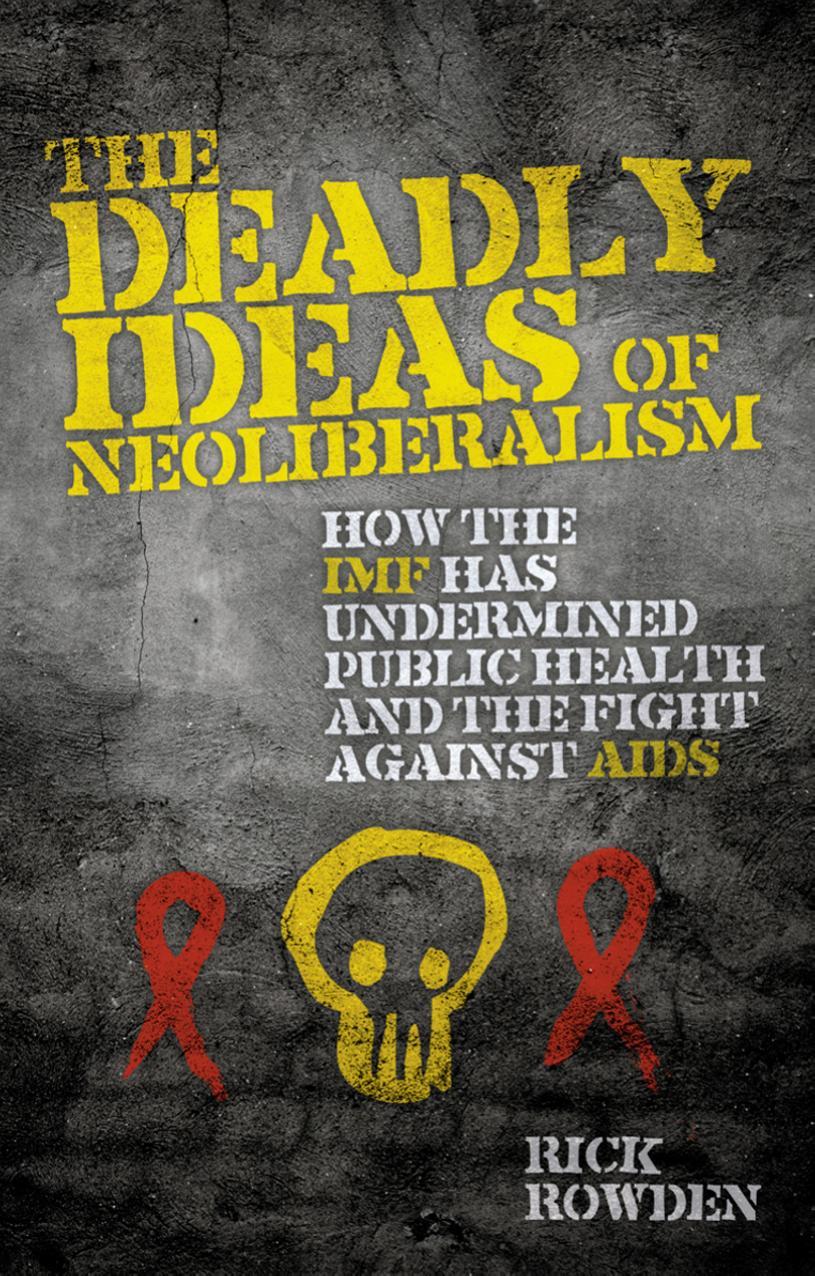
Author:Rowden, Rick
Language: eng
Format: epub, pdf
Publisher: Zed Books
Published: 2013-02-27T16:00:00+00:00
LABOUR FLEXIBILITY AND ITS CONSEQUENCES
Another major area of structural adjustment reforms over the years has been promoting ‘labour flexibility’ – meaning making it easier for workers to be fired, making it harder for them to form unions and collectively bargain for better wages or working conditions, and a watering down of government commitments to minimum wage laws. The IMF has advised regulatory changes throughout the developing world to remove restrictions on government and private employers firing or laying off workers. The IMF has actively promoted government downsizing, even though in many countries the government is the major employer and there are few prospects for alternative employment. The IMF has also viewed many worker benefits as too costly (if they are provided by the government) or too inefficient (if legally required of private employers). It has urged major scaling back of government pension programmes throughout the world while promoting privatization of public health insurance and pension systems. And the IMF has even called for the rollback of minimum wages in countries like Haiti.
In 2000, a study by the International Labour Office (ILO) on the impacts of structural adjustment on labour and employment found that in Africa since the introduction of adjustment programmes, the percentage of the labour force working in formal sector jobs declined (van der Hoeven 2000). This was mainly due to a declining number of workers in state enterprises and the inability of the economic and social system to generate sufficient jobs in other sectors to accommodate the retrenched workers from the public sector. Industrial and formal service employment have hardly increased (van der Geest and van der Hoeven 1999). By 2000, exchange rates had been adjusted, currencies had become (almost) fully convertible and budget deficits were decreased, and in most countries per capita growth had become positive. Despite these signs that countries have complied with the IMF’s demands for macroeconomic stability, however, the economic recovery in Africa had not yet yielded a massive creation of new jobs (van der Hoeven 2000).
By the term ‘labour flexibility’ the IMF and the World Bank have meant removing legal protections that inhibit employers from firing workers; revamping public pension systems to generate ‘new savings’ by cutting back on benefits for retired workers; slashing government workers’ salaries; privatizing the financial and energy operations of the government.
Lloyd and Weissman (2001) reviewed hundreds of loan documents between the IMF and the World Bank and twenty-six countries which included policy reforms for ‘labour flexibility’, including: civil service downsizing; privatization of government-owned enterprises, with lay-offs required in advance of privatization and frequently following privatization; promotion of labour flexibility – regulatory changes to remove restrictions on the ability of government and private employers to fire or lay off workers; mandated wage rate reductions, minimum wage reductions or containment, and spreading the wage gap between government employees and managers; and pension reforms, including privatization, that cut social security benefits for workers.
The IMF and the Bank say these policies may inflict some short-term pain, but are necessary to create the conditions for long-term growth and job creation.
Download
The Deadly Ideas of Neoliberalism by Rowden Rick.pdf
This site does not store any files on its server. We only index and link to content provided by other sites. Please contact the content providers to delete copyright contents if any and email us, we'll remove relevant links or contents immediately.
International Integration of the Brazilian Economy by Elias C. Grivoyannis(111320)
The Radium Girls by Kate Moore(12095)
Turbulence by E. J. Noyes(8114)
Nudge - Improving Decisions about Health, Wealth, and Happiness by Thaler Sunstein(7759)
The Black Swan by Nassim Nicholas Taleb(7198)
Rich Dad Poor Dad by Robert T. Kiyosaki(6727)
Pioneering Portfolio Management by David F. Swensen(6342)
Man-made Catastrophes and Risk Information Concealment by Dmitry Chernov & Didier Sornette(6140)
Zero to One by Peter Thiel(5869)
Secrecy World by Jake Bernstein(4799)
Millionaire: The Philanderer, Gambler, and Duelist Who Invented Modern Finance by Janet Gleeson(4539)
The Age of Surveillance Capitalism by Shoshana Zuboff(4353)
Skin in the Game by Nassim Nicholas Taleb(4308)
The Money Culture by Michael Lewis(4268)
Bullshit Jobs by David Graeber(4251)
Skin in the Game: Hidden Asymmetries in Daily Life by Nassim Nicholas Taleb(4052)
The Dhandho Investor by Mohnish Pabrai(3826)
The Wisdom of Finance by Mihir Desai(3792)
Blockchain Basics by Daniel Drescher(3640)
